




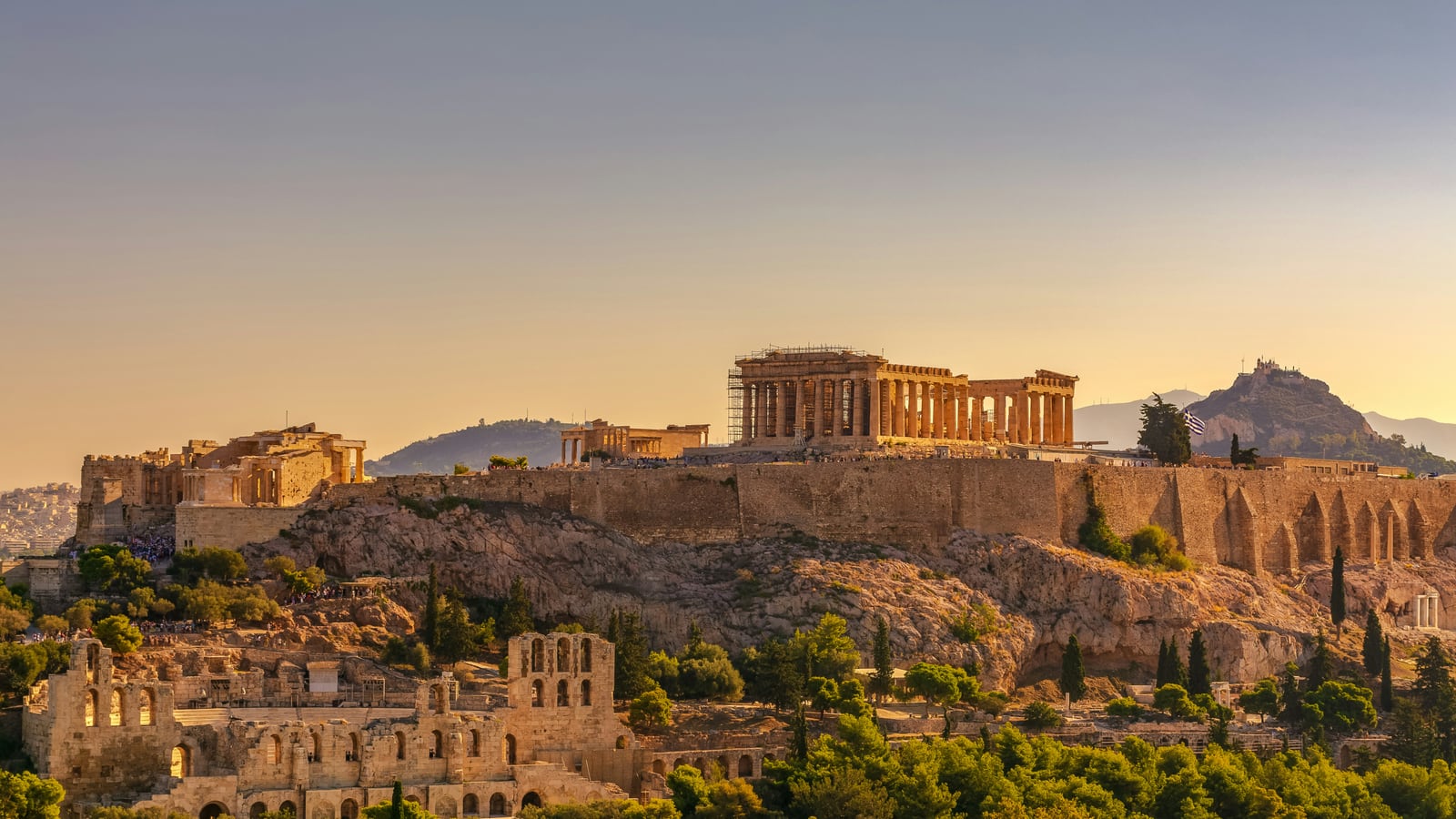




Greece ranks among the Mediterranean's most sought-after cruise destinations, offering direct access to ancient ruins, whitewashed island villages, and crystalline Aegean waters. Most cruises operate as 7-night Eastern Mediterranean itineraries, though 3–4 night Greek island-hopping voyages from Athens are increasingly popular.
Typical routes call at Santorini for its caldera views, Mykonos for beaches and nightlife, and Rhodes or Crete for archaeological sites. Many itineraries combine Greek ports with Turkey (Ephesus) or Croatia. Athens' Piraeus port serves as the primary embarkation point, giving passengers easy access to the Acropolis before or after sailing.
The compact distances between islands make Greece ideal for port-intensive itineraries—you'll often visit 4–5 destinations in a single week, with most ports offering tender or walking-distance access to town centers.
How to choose the right Greece cruise
Greece cruises vary widely in routing, ship size, and onboard atmosphere—here's how to match the right one to your travel style.
Decide between the classic loop and regional deep dives
Most week-long Greece cruises follow the Athens-Santorini-Mykonos-Crete circuit, departing from Piraeus and hitting the greatest hits of the Cyclades. These are ideal for first-timers who want iconic sunsets and postcard villages without overthinking logistics. But if you've already seen Santorini or want to escape the crowds, look for itineraries that focus on the Dodecanese (Rhodes, Patmos), the Ionian Islands (Corfu, Kefalonia), or the Northern Aegean (Thessaloniki, Kavala). Some lines also offer Turkey-Greece combos that add Ephesus or Bodrum. The trade-off: niche routes mean fewer departure dates and sometimes repositioning from non-Greek ports like Venice or Istanbul.
Match ship size to the experience you want
Mega-ships from mainstream lines offer stability, abundant dining options, and activities for families—but they dock at commercial ports like Piraeus or Heraklion, often requiring a bus ride to town. Small-ship lines (think 100–300 passengers) can anchor directly in Santorini's caldera or pull into tiny harbors like Hydra and Monemvasia that big ships can't access. You'll sacrifice pools and Broadway shows, but gain flexibility and a more intimate pace. If you're traveling with kids or want robust onboard entertainment, go big. If you prioritize authentic port experiences and hate tendering with 3,000 other passengers, book small.
Consider departure port logistics carefully
Piraeus (Athens) is the dominant homeport, which makes pre- or post-cruise hotel stays straightforward and flights abundant. But cruises leaving from Venice, Rome (Civitavecchia), or Barcelona often include Greece as part of a longer Mediterranean itinerary—you'll see fewer Greek islands but add Italy or Croatia to the mix. One-way itineraries (e.g., Athens to Venice) maximize variety but require positioning flights on both ends. Round-trip from Piraeus is the simplest choice for cruise-focused travelers; one-ways suit those building a larger European trip.
Know who thrives on Greece cruises
Greece cruises work beautifully for couples chasing romance, retirees who want hassle-free island-hopping, and first-time cruisers testing the waters in calm seas with short distances between ports. Families do well on larger ships with kids' clubs, though shore days involve lots of walking on cobblestones and hills. If you're a hardcore history buff, choose itineraries with overnights in Athens or stops at Delos and Knossos. Beach lovers should verify that islands like Mykonos and Crete include beach time in port calls—many cruise stops prioritize towns over coastline.
Best time to go on a Greece cruise
The ideal time for your Greece cruise depends on whether you prioritize perfect weather, smaller crowds, or better value.
Peak season: June through August
Summer brings guaranteed sunshine and calm seas, but you'll pay premium prices and share popular sites like Santorini and Mykonos with thousands of other visitors. Temperatures regularly hit the high 80s to mid-90s°F, which can feel intense when exploring archaeological sites with limited shade. Book shore excursions well in advance during these months, as they sell out quickly. If you don't mind the heat and crowds, the extended daylight hours and vibrant island atmosphere make this the most energetic time to cruise.
Shoulder season: April through May and September through October
These months offer the sweet spot for most cruisers—pleasant temperatures in the 70s, fewer tourists at major attractions, and prices that drop 20-30% compared to summer. The sea is warm enough for swimming by late April, and September often delivers some of the year's best weather with calmer winds than spring. Occasional rain showers are possible, particularly in April and October, but they're typically brief. This is when you'll get the most authentic experience of Greek island life without the summer crush.
Off-season: November through March
Winter cruising means rock-bottom prices and nearly empty destinations, but many island businesses close for the season and you'll face cooler temperatures (50s-60s°F) and rougher seas. Some smaller ports may have limited or cancelled stops due to weather conditions. However, if you're more interested in Athens, Rhodes, or Crete's historical sites than beach time, and you don't get seasick easily, you can find exceptional deals during these months.
What Greece Cruises Cost
For a typical 7-night Greece cruise, expect to pay around $1,225 per person for an interior cabin, though prices start as low as $344 depending on sailing date and cruise line.
- Interior cabins typically run about $1,225 per person, offering the most budget-friendly way to explore the Greek islands
- Oceanview cabins add around $200-$250 to the base price, giving you a window to the Aegean without the premium of outdoor space
- Balcony cabins generally cost $600-$650 more than interior options, a popular choice for those wanting private outdoor access while island-hopping
- Suites command the highest rates at roughly double the interior price, including extra space and enhanced amenities
- Shoulder season sailings (April-May and September-October) tend toward the lower end of the range, while peak summer weeks push prices higher
Prices vary significantly based on when you book and when you sail. The $344 starting price typically reflects off-peak dates or last-minute deals, while summer departures—especially July and August—skew toward the higher end. Most travelers find the best balance of weather and value by booking balcony cabins for spring or fall departures several months in advance.
Top cruise lines for Greece cruises





Ports of call on Greece cruises
Athens
Piraeus serves as the main port for Athens, offering cruise travelers a gateway to Greece’s historic capital. Come ashore and you’re just a short drive from the Acropolis, where the Parthenon stands above the city’s lively neighborhoods. Stroll through the Plaka district’s winding streets, explore the treasures of the Acropolis Museum, or relax at a café in Syntagma Square. Beyond ancient ruins, Athens offers vibrant markets, neoclassical architecture, and leafy parks. For those with more time, day trips to Cape Sounion’s Temple of Poseidon or the beaches along the Athenian Riviera are popular options.
Explore cruises visiting Athens →Corfu
Corfu blends Venetian charm with lush Mediterranean landscapes, where pastel-hued Old Town alleys lead to lively squares and historic fortresses. Olive groves and cypress-dotted hills frame the island’s coastline, inviting exploration of both its cultural heritage and natural beauty.
Explore cruises visiting Corfu →Mykonos
Mykonos enchants with its maze of whitewashed lanes, vibrant bougainvillea, and iconic windmills overlooking the Aegean. The lively harbor and charming Old Town invite exploration, while nearby beaches and waterfront cafés capture the island’s relaxed yet cosmopolitan spirit.
Explore cruises visiting Mykonos →Santorini
Santorini’s cruise port welcomes you to one of Greece’s most photogenic islands, famous for its whitewashed villages perched high above the deep blue Aegean. Come ashore and take the cable car or zigzag path up to Fira, where narrow lanes are lined with shops, cafés, and sweeping caldera views. The island’s volcanic history is on display at the archaeological site of Akrotiri, while the cliffside village of Oia draws visitors for its sunset vistas and blue-domed churches. Nearby black-sand beaches, local wineries, and traditional villages offer a taste of Santorini’s relaxed pace and unique character.
Explore cruises visiting Santorini →Olympia
Cruise ships call at Katakolon, a small port on the western coast of the Peloponnese, serving as the gateway to ancient Olympia. From here, it’s a short journey inland to the archaeological site where the Olympic Games began, with its evocative ruins, temples, and the original stadium. In Katakolon itself, visitors can stroll along the waterfront, browse local shops, or sample Greek seafood at harborside tavernas. The surrounding countryside is dotted with olive groves and vineyards, and nearby beaches offer a relaxed spot to swim or unwind after exploring Olympia’s remarkable history.
Explore cruises visiting Olympia →Rhodes
Come ashore at Rhodes, where the port sits just outside the medieval walls of the Old Town—a UNESCO World Heritage Site. Wander cobbled streets lined with stone mansions, lively squares, and the impressive Palace of the Grand Masters. The island’s history as a crossroads of civilizations is on display in its ancient ruins, Ottoman mosques, and Byzantine churches. Beyond the city, golden beaches and the whitewashed village of Lindos, with its hilltop acropolis and sweeping sea views, are popular day trips. Whether you’re exploring centuries-old fortifications or relaxing at a seaside taverna, Rhodes offers a memorable blend of history, scenery, and Greek island charm.
Explore cruises visiting Rhodes →Crete
Crete, Greece’s largest island, welcomes cruise visitors with a blend of ancient history, lively towns, and inviting beaches. Ships typically dock at Heraklion, the island’s main port and gateway to the legendary Palace of Knossos, where the myths of King Minos and the Minotaur come alive. Stroll through Heraklion’s old town to discover Venetian walls, bustling markets, and the impressive Archaeological Museum. Beyond the city, sunseekers can relax on sandy shores, while those seeking local flavor will find charming villages and olive groves scattered across the hills. Crete’s dramatic landscapes, from rugged mountains to turquoise bays, make it a rewarding stop for both culture and scenery.
Explore cruises visiting Crete →Patmos
Patmos welcomes cruise visitors with its serene Aegean setting and deep spiritual heritage. Come ashore at the small port of Skala, where whitewashed houses and waterfront cafés set a relaxed island tone. The main draw is the Monastery of St. John, perched above the town and visible from the harbor—a revered pilgrimage site linked to the Book of Revelation. Wander the cobbled lanes of Chora, the island’s hilltop old town, for sweeping sea views and a glimpse of traditional Greek island life. Many visitors also explore the Cave of the Apocalypse, believed to be where St. John received his visions. Patmos offers quiet beaches, gentle walking trails, and a peaceful atmosphere that invites you to slow down and soak in the island’s unique character.
Explore cruises visiting Patmos →FAQ for booking Greece cruises
How much should I budget for a Greece cruise including extras?
Beyond the cruise fare (averaging $1,225 per person for an interior cabin), plan for shore excursions ($50-150 per port), gratuities (typically $14-16 per person per day), and drinks or specialty dining if not included in your package. Most travelers spend an additional $500-800 per person for a week-long cruise when factoring in pre-cruise Athens hotels, airport transfers, and onboard expenses.
What's the difference between a 7-day Greece cruise and a Greek Isles itinerary?
A dedicated Greece cruise typically departs from Athens (Piraeus) and focuses exclusively on Greek islands like Santorini, Mykonos, Crete, and Rhodes. Greek Isles itineraries departing from Italy or as part of longer Mediterranean cruises usually include only 2-3 Greek ports mixed with stops in Turkey, Croatia, or Italy—offering less depth but more geographic variety.
Are Greece cruises good for first-time cruisers?
Greece cruises are excellent for cruise beginners due to calm Aegean seas, short overnight sailing distances, and daily port stops that break up time onboard. The combination of iconic destinations, manageable ship sizes on many routes, and straightforward logistics from Athens makes it less overwhelming than longer ocean crossings or multi-country itineraries.
When should I book a Greece cruise to get the best price?
Booking 6-9 months in advance for shoulder season departures (April-May or September-October) typically yields the best value, with prices 20-30% lower than summer and better cabin selection. Last-minute deals occasionally appear for off-peak dates, but summer sailings (June-August) require early booking as they sell out quickly at premium rates.
Do small ships or big ships offer better Greece cruise experiences?
Small ships (100-300 passengers) access ports like Hydra, Monemvasia, and Santorini's caldera that large vessels can't reach, creating more intimate and authentic experiences. Large ships provide more onboard amenities, entertainment, and family facilities but dock at commercial ports requiring bus transfers—choose based on whether you prioritize unique port access or robust ship features.
Is it worth paying extra for a balcony cabin on a Greece cruise?
Balcony cabins ($600-650 more than interior) are particularly worthwhile on Greece cruises since you'll sail past dramatic coastlines, witness Santorini caldera arrivals, and enjoy island views during frequent daylight sailing between ports. Unlike ocean crossings where you stare at open water, the Aegean's island-hopping routes provide constantly changing scenery that maximizes balcony value.
Can you visit Santorini and Mykonos on the same Greece cruise?
Most 7-day Greece cruises departing from Athens include both Santorini and Mykonos as part of the classic Cyclades circuit, along with stops in Crete and sometimes Rhodes or other islands. These two islands are standard on mainstream itineraries, though you'll typically get only 6-8 hours in port at each—enough for highlights but not deep exploration.


